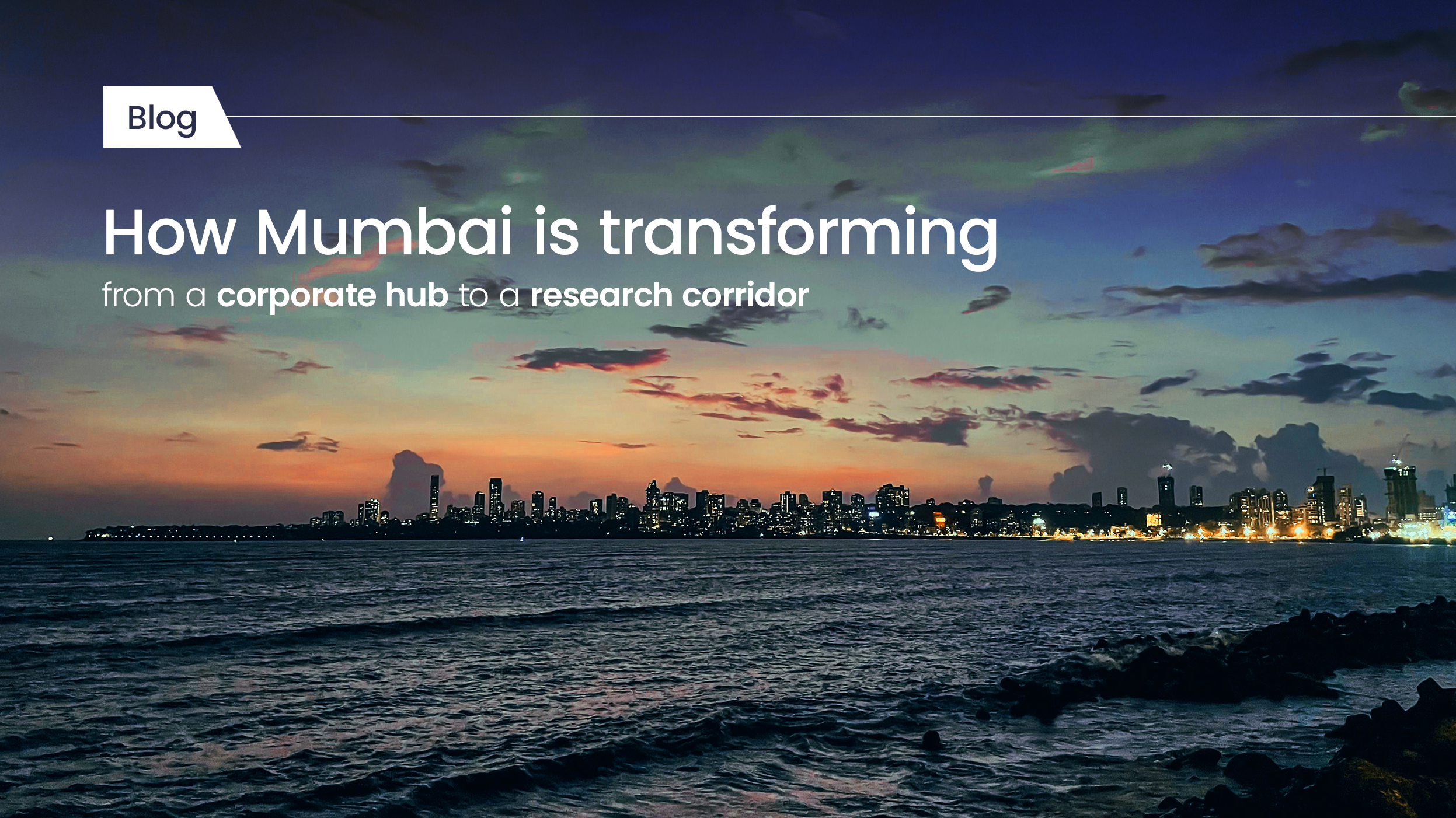
For decades, Mumbai has defined India’s economic identity as a centre for finance, trade, and corporate leadership. Yet, alongside boardrooms and business districts, another transformation has been steadily unfolding. The region is evolving into a science-led ecosystem, where research, manufacturing, and innovation operate at scale — supported by infrastructure, talent, and connectivity.
This evolution reflects a broader shift: pharmaceutical, biotech, and advanced science companies are no longer confined to traditional corporate environments. Instead, they are shaping distributed research and manufacturing corridors across the Mumbai–Navi Mumbai region.
From Corporate Concentration to Scientific Continuity
Maharashtra contributes close to 25 -30% of India’s pharmaceutical manufacturing output, with a significant share concentrated across the Mumbai–Navi Mumbai belt. What began as a strong corporate and industrial base has matured into a broader scientific ecosystem supporting formulation, manufacturing, contract research, and emerging biotech activity.
Today, the region hosts over 500 life sciences companies, alongside more than 20 premier science and research institutions as well as private equity firms, venture capital funds, and global investors, creating direct access to funding for scientific growth. The city has also seen a steady rise in startup funding, supported by incubators, accelerators, and research institutions across the region.
This combination creates a powerful ecosystem effect:
capital fuels innovation, industry attracts talent, and institutional depth strengthens execution, reducing both operational and financial risk for science-led businesses.
Why Science Moves Differently Than Corporates
Scientific operations place fundamentally different demands on cities than corporate offices. Laboratories, pilot plants, and regulated manufacturing environments require stable utilities, compliant waste handling, and long-term scalability. These requirements have gradually pushed science-led growth away from dense office districts toward corridor-based development models.
In the Mumbai region, this shift has led to the emergence of interconnected clusters:
Andheri and Central Mumbai continue to anchor corporate headquarters and decision-making functions, reinforcing the city’s role as India’s financial and strategic nerve centre for life sciences. Surrounding this core, the Thane–Belapur belt has evolved into a well-established industrial ecosystem supporting manufacturing and supplier networks, while Taloja has emerged as a key hub for chemical production under MIDC planning. Further east, the Belapur–Juinagar–Turbhe stretch in Navi Mumbai is increasingly shaping up as a planned zone for research and development activity, benefiting from integrated infrastructure and connectivity. In parallel, areas like Palava, are gradually witnessing interest in industrial and other investments, reflecting the outward expansion of Mumbai’s scientific footprint.
This distributed model allows companies to separate and optimize functions — from research and pilot-scale work to manufacturing and corporate oversight — within a single regional ecosystem.
Connectivity as a Strategic Advantage
Mumbai offers strong multimodal connectivity that supports efficient industrial and research operations. Mumbai International Airport serves as one of India’s busiest global gateways, while the recently inaugurated Navi Mumbai International Airport is expected to significantly enhance cargo capacity and reduce logistics bottlenecks. The region also benefits from access to Jawaharlal Nehru Port (JNPT), India’s largest container port, enabling efficient movement of containerized cargo and supporting globally integrated supply chains.
In addition, extensive highway networks, suburban rail systems, and the expanding Mumbai Metro network ensure seamless movement of workforce and materials across clusters, reducing operational friction in a geographically distributed ecosystem. This integrated connectivity strengthens Mumbai’s position as a reliable base for regulated industries operating under strict timelines.
The Role of Integrated Scientific Campuses
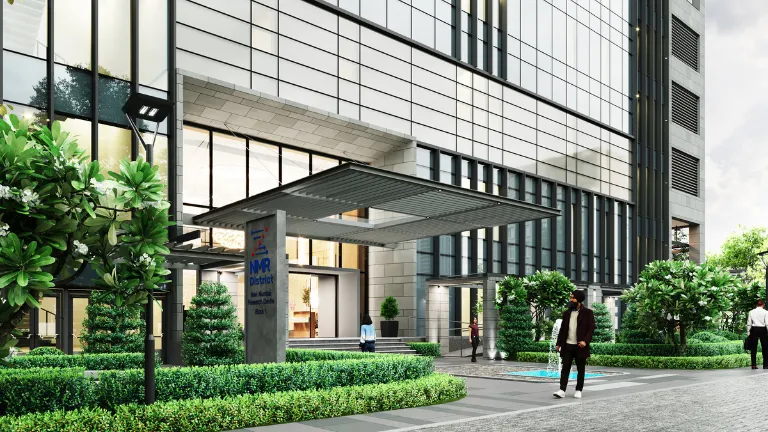
Within this evolving ecosystem, new developments are emerging to support the specific needs of science-led companies. One such example is the Navi Mumbai Research District (NMRD), a 2.5 million master-planned scientific campus designed to enable research, development, and manufacturing within a connected ecosystem. Strategically located within Navi Mumbai’s industrial belt, it reflects a broader shift toward purpose-built environments that combine infrastructure readiness with proximity to talent, logistics, and supporting industries.
Conclusion
Mumbai is no longer defined solely by finance and corporate headquarters. It is increasingly a science-enabled region, where corporate hubs coexist with research corridors, and where infrastructure planning shapes scientific continuity.
As this ecosystem matures, success will depend not on isolated facilities, but on how intelligently entire districts are designed , balancing scale with sustainability, growth with resilience, and innovation with responsibility.
At Rx Propellant, we design and deliver purpose-built campuses that balance cutting-edge science with sustainability, flexibility, and future readiness. Our campuses are IFC EDGE Advanced and LEED Certified, underscoring our commitment to sustainable excellence. If you’re evaluating your next-generation R&D hub or manufacturing campus, let’s explore how our ESG-aligned infrastructure can drive long-term value.