Every year on May 11, India pauses to mark National Technology Day, a date that commemorates not just the Pokhran nuclear tests of 1998, but the enduring national conviction that science, when backed by purpose, can change the world. As we celebrate this year, the story worth telling loudly is the one unfolding in India’s life sciences sector: a quiet but consequential revolution in indigenous innovation.
Here are five breakthroughs that signals just how far India has come.
1. Drug Discovery: From Generics to Innovation
India’s pharmaceutical industry has long been known for generics. That narrative is now evolving into one of original innovation. A defining milestone came when Orchid Pharma secured US FDA and European regulatory approvals for Enmetazobactam, a novel molecule discovered in-house. Marketed in combination therapy for drug-resistant infections, it became the first New Chemical Entity discovered by an Indian company to reach global markets.
This is significant because antimicrobial resistance is one of the most pressing global health challenges. Developing a new molecule in this space requires deep scientific capability and long-term investment. It signals a clear shift. India is not just manufacturing medicines at scale, it is inventing them.
2. Vaccines: Global Impact at Scale
India already plays a central role in global immunisation, supplying vaccines to a large share of the world’s population. The Serum Institute of India has further strengthened this position with the R21 Matrix M malaria vaccine, developed in collaboration with the University of Oxford. Now being deployed in African countries, it is among the most affordable malaria vaccines globally. What makes this breakthrough important is its accessibility. Malaria continues to impact millions, and affordability has long been a barrier to widespread immunisation.
India’s ability to combine research, manufacturing, and pricing for access continues to define its global role.
3. Medical Devices: Expanding Access to Diagnostics
Access to advanced diagnostics has often been limited by high costs and import dependency. That gap is now beginning to narrow. Bengaluru-based Voxelgrids has developed an indigenous MRI system designed to deliver comparable performance at a significantly lower cost. By rethinking core components such as magnet design, the system reduces both acquisition and operating expenses. This is critical in improving access to diagnostic imaging, particularly in cost-sensitive markets.
As domestic manufacturing grows, India is steadily reducing reliance on imports while strengthening its healthcare infrastructure.
4. Robotics and Surgery: Making Precision More Accessible
Robotic surgery has traditionally been associated with high costs and limited accessibility. India is working to change that. SS Innovations, based in Gurugram, has developed an indigenous robotic surgical system aimed at reducing the cost of robotic-assisted procedures. Designed for affordability without compromising precision, it enables more hospitals to adopt advanced surgical technologies.
This has implications beyond India. As healthcare systems globally look to balance quality with cost, accessible surgical robotics can play a key role in expanding advanced care.
5. Biotechnology: Advancing Next-Generation Therapies
India’s biotech ecosystem is entering a new phase, with progress in complex therapies such as cell and gene treatments. ImmunoACT, an IIT Bombay-incubated company, has developed NexCAR19, India’s first CAR-T cell therapy for certain blood cancers. Manufactured domestically, it is significantly more affordable than imported alternatives.
CAR-T therapy represents one of the most advanced forms of cancer treatment, involving genetic modification of a patient’s own cells. Making such therapies accessible in India is a major step in reducing treatment gaps. It reflects a broader shift towards building capability in high-end biotechnology.
The Common Thread
Across all these breakthroughs, one theme stands out clearly. India’s life sciences innovations are built with access in mind. The focus is not only on scientific advancement, but on ensuring that these advancements reach more people.
Enabling Faster Innovation
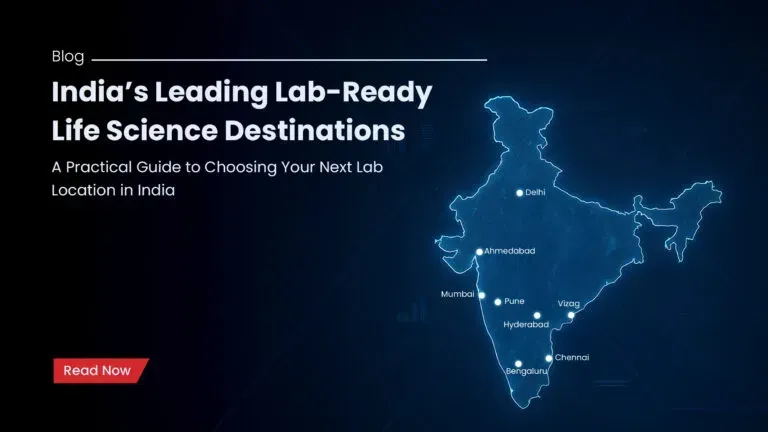
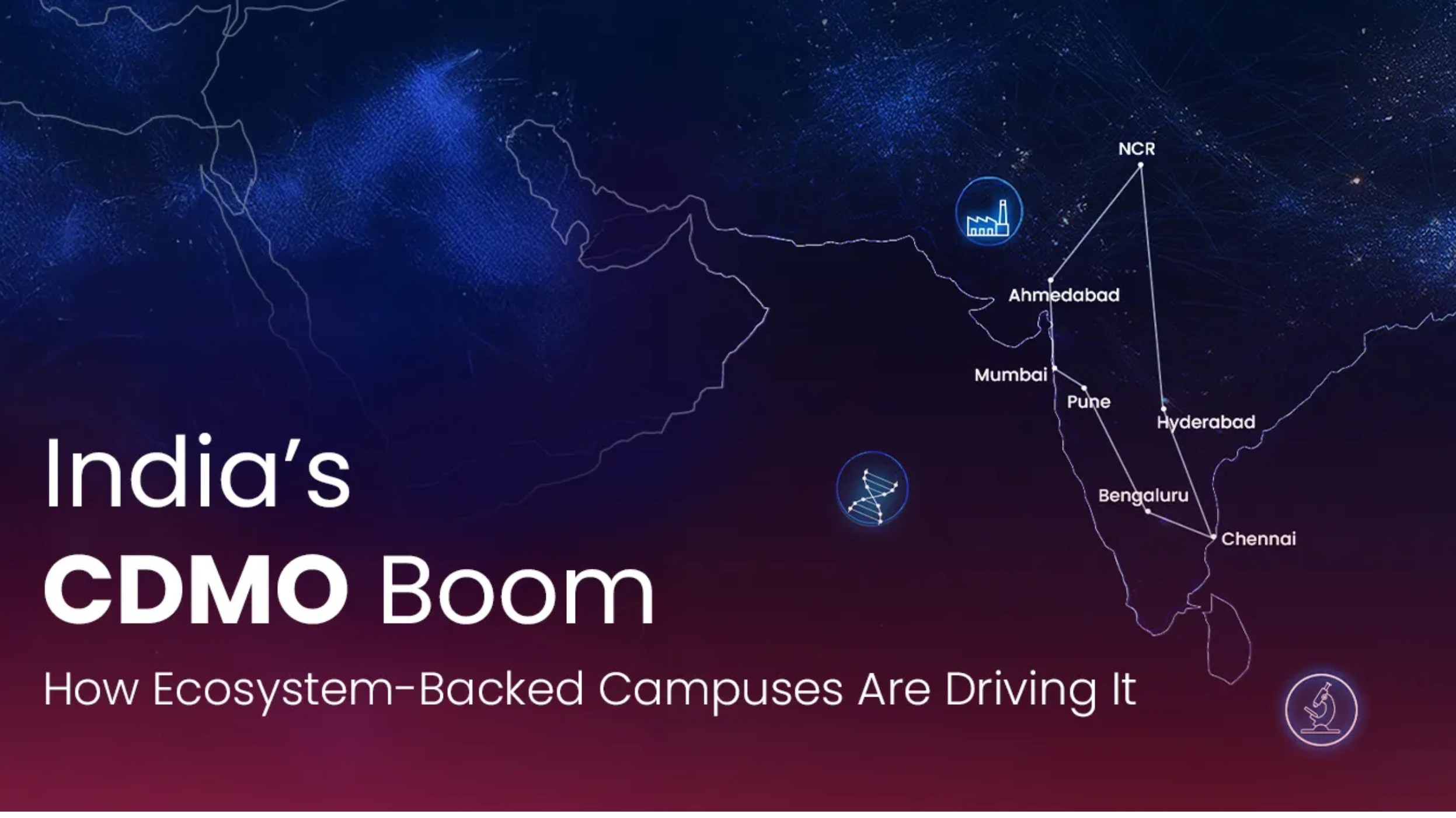
Scientific progress depends not only on ideas, but on the environment in which those ideas are developed. Access to ready to move labs in India is becoming increasingly important for companies looking to accelerate research without delays. Whether it is research lab space in India or specialised lab space in Genome Valley Hyderabad and Mumbai, the ability to start work immediately can significantly impact timelines.
At Rx Propellant, our campuses are designed to support this need by offering flexible, high-quality life sciences lab space in India. Because in healthcare, speed is not just a business advantage. It directly impacts outcomes.
Conclusion
India’s life sciences sector is no longer just supporting global healthcare. It is actively shaping it. This National Technology Day, the focus is not only on achievements, but on what they represent. A growing ability to build solutions that are innovative, scalable, and accessible.
A healthier world, built in India and trusted by the world.