The life sciences real estate market is undergoing a structural shift.
Contrary to expectations of caution, large, well-capitalised organisations are leaning into expansion, not pulling back. But this is not expansion for the sake of growth. It is deliberate, strategic, and infrastructure-led. Rather than holding back, these companies are doubling down on scale and certainty, using this moment to strengthen long-term R&D capabilities and secure high-quality life sciences lab space in India and globally.
Scaling up With Intent
Recent leasing trends in the United States show a clear move towards larger deal sizes among established life sciences players. Transactions above 50,000 sq. ft. have expanded significantly, with average lease sizes rising from approximately 106,000 sq. ft. in 2021 to nearly 183,000 sq. ft. in Q1 2025.
This is not just expansion; it is consolidation of capability. Instead of operating across fragmented sites, companies are bringing research, development, and support functions into integrated campuses or multi-tenanted R&D building lease environments that allow for scale and collaboration.
At the same time, lease tenures are extending, often beyond 10 years. This reflects a shift from flexibility-driven leasing to control-driven infrastructure strategy, especially when securing specialised formats like warm shell lab space for lease that benefit from long-term stability.
Why Larger Formats Are Winning?
Bigger spaces are not just a function of growth; they are a response to how science itself is evolving. Modern research demands:
• Co-location of multiple capabilities (biology, chemistry, analytics, scale-up)
• Seamless progression from discovery to development without physical or operational disruption
• Built-in expansion capacity to support growth
For companies evaluating research lab space in India, larger, integrated formats enable seamless scaling without repeated relocation or retrofitting. This translates into a simple advantage: scale once, grow within.
Turning Market Conditions Into Long-term Advantage
Periods of market recalibration create opportunities and large life sciences companies are using them to secure strategic positions. With increased availability of lab space available for lease in India, organisations can access premium facilities including ready to move-in labs with better commercial terms, which reduce time to operationalisation. But the advantage is not just better commercial terms. It also allows locking in high-quality assets early and reducing time lost in design, approvals, and fit-outs. This approach ensures continuity, reduces execution risk, and supports long R&D cycles where infrastructure stability is critical.
In life sciences, where timelines directly impact value creation, organisations that recognise this are using the current environment to de-risk future growth.
The Power of Ecosystem-led Expansion
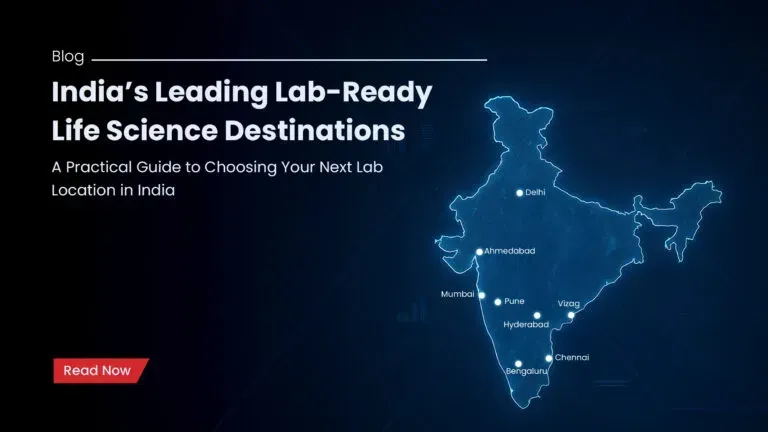
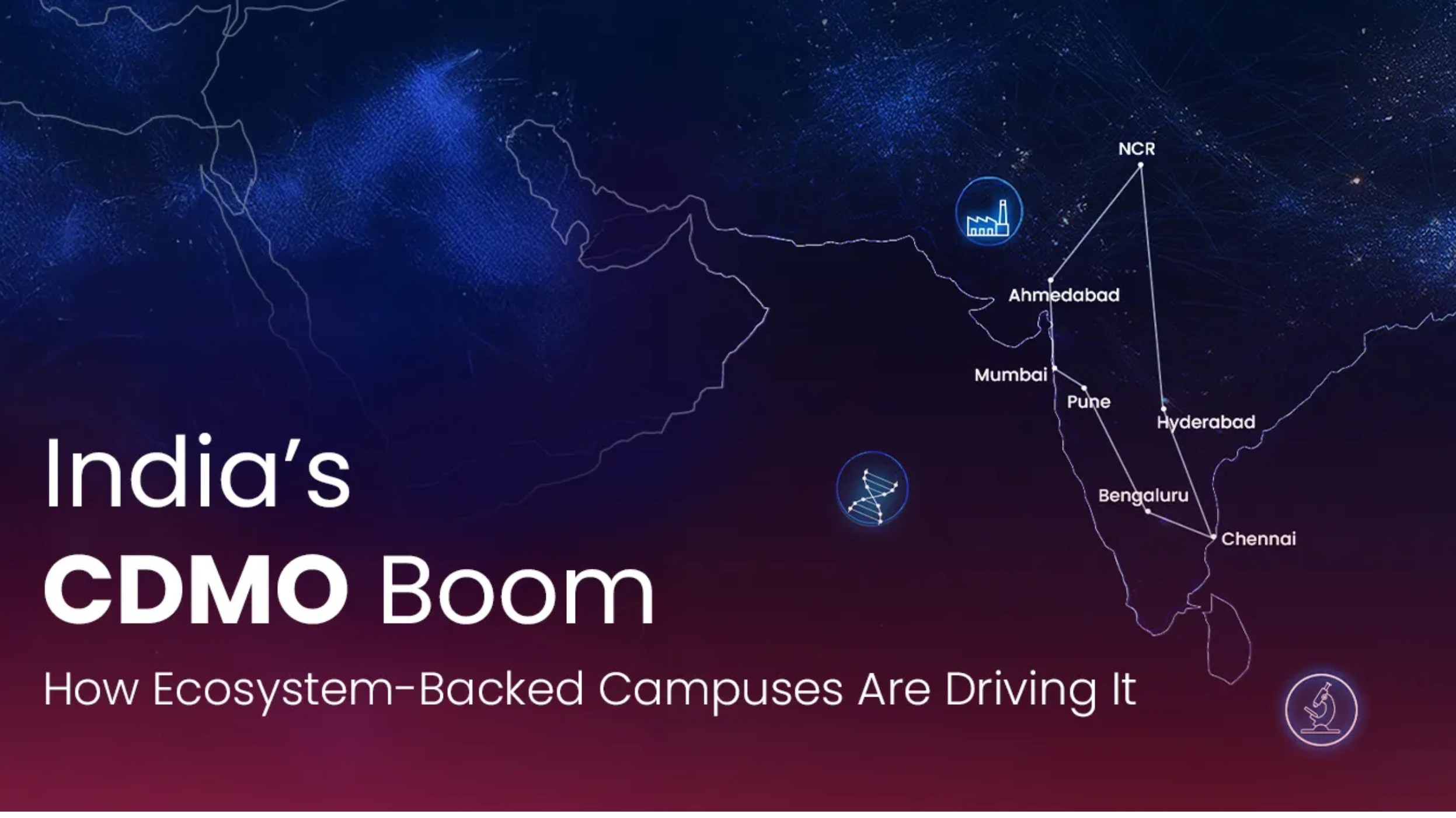
Scale alone is not enough, location amplifies its impact. Leading occupiers are prioritising clusters that offer access to CDMOs, CROs, talent, and academic institutions. For instance, lab space in Genome Valley, Hyderabad continues to attract large occupiers due to its dense ecosystem and mature infrastructure while emerging interest in biotech lab space in Mumbai reflects the growing depth of life sciences activity in the region.
For large organisations, embedding themselves within such ecosystems enhances speed to market and far outweigh the benefits of relocating elsewhere, explaining the shift toward longer lease commitments.
R&D infrastructure as a strategic asset
A clear mindset shift is underway. R&D real estate is no longer treated as a support function, it is becoming core to business strategy.
Large, integrated campuses enable:
• Operational control
• Scalable infrastructure
• Consistency in quality and compliance
More importantly, they allow companies to align infrastructure with long-term pipeline needs and evolving scientific requirements.
A Long-term Commitment to Growth
What we are seeing is a structural shift. Bigger spaces and longer leases are not just outcomes, they are deliberate choices aligned with long-term innovation goals. As demand for lab space in India grows, companies are prioritising scale, ecosystem access, and infrastructure readiness over short-term flexibility. The result is a more mature approach to lab space for rent, where real estate decisions directly support scientific and commercial success.
The takeaway is clear: companies that commit early to the right scale and location are not just securing space, they are securing long-term competitive advantage.
At Rx Propellant, we design and deliver purpose-built campuses that balance cutting-edge science with sustainability, flexibility, and future readiness. Our campuses are IFC EDGE Advanced and LEED Certified, underscoring our commitment to sustainable excellence. If you’re evaluating your next-generation R&D hub or manufacturing campus, let’s explore how our ESG-aligned infrastructure can drive long-term value.